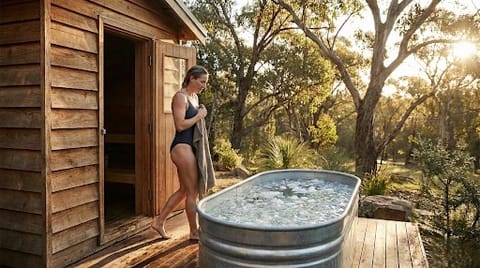
Ice Bath and Sauna: How Contrast Immersion Works
By ThermoPure • • Updated
Alternating between extreme heat and extreme cold isn't new. Athletes, military personnel, and Nordic cultures have practiced contrast therapy for centuries. But in the last few years, it's gone from niche biohacking to mainstream recovery — and for good reason.
Contrast therapy — specifically alternating between sauna sessions and ice baths — creates a powerful physiological response that neither modality achieves alone. Here's what you need to know to do it properly.
What Is Contrast Therapy?
Contrast therapy involves alternating between hot and cold exposure. In its most effective form, this means:
- Heat phase: Sauna (traditional, infrared, or steam) at 80-100°C
- Cold phase: Ice bath or cold plunge at 10-15°C
The alternation between vasodilation (heat opens blood vessels) and vasoconstriction (cold narrows them) creates a "pumping" effect that's been associated with enhanced recovery.
The Science Behind It
When you sit in a sauna, your body responds by:
- Increasing heart rate (similar to moderate exercise)
- Dilating blood vessels to release heat
- Activating heat shock proteins
- Increasing blood flow to muscles and skin
When you then move to an ice bath, the opposite happens:
- Heart rate drops
- Blood vessels constrict rapidly
- Cold shock proteins activate
- Blood flow redirects to core organs
This rapid alternation creates what researchers call a "vascular workout" — your circulatory system is being trained to respond efficiently to stress.
What the Research Shows
Studies on contrast water therapy (CWT) have found:
- Reduced perceived muscle soreness compared to passive recovery
- Faster restoration of strength and power after intense exercise
- Improved subjective feelings of recovery
- Potential benefits for reducing inflammation markers
A 2017 meta-analysis published in the Journal of Science and Medicine in Sport found that contrast therapy was more effective than passive recovery for reducing muscle soreness after exercise.
The Optimal Protocol
Based on current evidence and practitioner experience, here's the recommended approach:
Beginner Protocol
| Phase | Duration | Temperature |
|---|---|---|
| Sauna | 10-15 min | 80-85°C |
| Ice Bath | 1-2 min | 12-15°C |
| Repeat | 2 rounds | — |
| End on | Cold | — |
Intermediate Protocol
| Phase | Duration | Temperature |
|---|---|---|
| Sauna | 15-20 min | 85-95°C |
| Ice Bath | 2-3 min | 10-13°C |
| Repeat | 3 rounds | — |
| End on | Cold (recovery) or Heat (relaxation) | — |
Advanced Protocol
| Phase | Duration | Temperature |
|---|---|---|
| Sauna | 15-20 min | 90-100°C |
| Ice Bath | 3-5 min | 8-12°C |
| Repeat | 3-4 rounds | — |
| End on | Depends on goal | — |
Key Timing Rules
End on COLD if your goal is recovery. Cold exposure after heat reduces inflammation and creates a stimulating, alert feeling. This is ideal post-training or in the morning.
End on HEAT if your goal is relaxation and sleep. Heat promotes parasympathetic nervous system activation. This is ideal in the evening.
Should You End on Hot or Cold?
This is the most debated question in contrast therapy. Here's the simple answer:
- Post-workout recovery: End on cold. You want to reduce inflammation and feel energised.
- Evening relaxation: End on heat. You want to activate the parasympathetic nervous system for sleep.
- General wellbeing: Either works. Experiment and see what your body prefers.
How to Set Up Contrast Therapy at Home
You don't need a fancy facility. Here's a practical home setup:
Option 1: Portable Ice Bath + Gym Sauna
Most gyms have a sauna. Bring your portable ice bath (even an Aldi ice bath works) and set it up at home. Do your sauna session at the gym, then come home to the ice bath.
Not ideal for rapid alternation, but still effective.
Option 2: Full Home Setup
- Sauna: Barrel saunas start around $3,000-5,000 AUD. Infrared saunas from $1,500.
- Ice bath: Portable tubs from $40-500. Dedicated cold plunges from $3,000+.
The most practical setup for most people is a gym sauna membership + a home ice bath.
Upgrading Your Ice Bath for Contrast Therapy
Plain cold water works, but adding minerals to your ice bath enhances the experience. Magnesium chloride, in particular, complements contrast therapy by supporting muscle relaxation during the recovery phase.
ThermoPure® Recovery Bath Minerals are designed specifically for this purpose — the menthol amplifies the cold sensation during the contrast phase, while magnesium and Dead Sea minerals support recovery. One 250g pouch per soak.
Common Mistakes
1. Going Too Extreme Too Fast
Start with shorter cold exposures and moderate sauna temperatures. Build tolerance over weeks, not days. Jumping into 100°C sauna followed by a 5°C plunge when you've never done either is asking for trouble.
2. Dehydration
Saunas cause significant fluid loss. Drink water before, between rounds, and after. A good rule: 500ml before your session, sips between rounds, and 500ml-1L after.
3. Doing Contrast Therapy Immediately After Hypertrophy Training
If your primary goal is muscle growth, some research suggests that cold exposure immediately after resistance training may blunt the hypertrophy response. Consider waiting 4-6 hours, or saving contrast therapy for rest days.
If recovery and performance are your priority (CrossFit, endurance sports, competitive athletes), the recovery benefits likely outweigh any potential reduction in hypertrophy signalling.
4. Inconsistent Timing
Like any recovery modality, contrast therapy works best with consistency. Once or twice a week is a good target. Random sessions every few months won't build the adaptation response.
Who Should Avoid Contrast Therapy?
Contrast therapy is generally safe for healthy individuals, but consult a medical professional if you have:
- Cardiovascular conditions
- Raynaud's disease
- Uncontrolled high blood pressure
- Pregnancy
- Open wounds or skin conditions
If you're unsure, start with milder temperatures and shorter durations.
Contrast Therapy vs. Ice Bath Only
| Factor | Ice Bath Only | Contrast Therapy |
|---|---|---|
| Time required | 10-15 min | 45-75 min |
| Equipment needed | Ice bath | Ice bath + sauna |
| Recovery benefit | High | Very high |
| Relaxation | Moderate | High |
| Accessibility | Easy | Requires sauna access |
| Cost | Low | Higher |
Both are effective. Contrast therapy has the edge for overall recovery, but it requires more time and equipment. If you only have access to an ice bath, you're still getting significant benefits.
A Sample Weekly Protocol for Athletes
| Day | Activity | Recovery |
|---|---|---|
| Monday | Heavy training | Ice bath (10-15 min) |
| Tuesday | Moderate training | Active recovery |
| Wednesday | Heavy training | Ice bath (10-15 min) |
| Thursday | Rest day | Contrast therapy (45-60 min) |
| Friday | Moderate training | Active recovery |
| Saturday | Competition/heavy training | Ice bath (10-15 min) |
| Sunday | Rest day | Contrast therapy or full rest |
Protocol for contrast day:
- Start with HEAT (15-20 min sauna).
- Move to COLD (3-5 min ice bath with ThermoPure®).
- Return to HEAT (10-15 min).
- Finish with COLD (2-3 min).
- Optional: One more heat/cold round.
- End on COLD for recovery, HEAT for sleep.
Total: 45-75 minutes.
The Bottom Line
Contrast therapy is one of the most effective recovery strategies available. The combination of heat and cold creates physiological responses that neither achieves alone.
You don't need an expensive setup — a gym sauna and a portable ice bath at home is enough to get started. Add minerals to your cold water, stay hydrated, and be consistent.
The athletes who recover best are the athletes who perform best. Contrast therapy is a tool that helps you do both.
ThermoPure® Recovery Bath Minerals are designed to enhance your cold water immersion experience. Australian made.